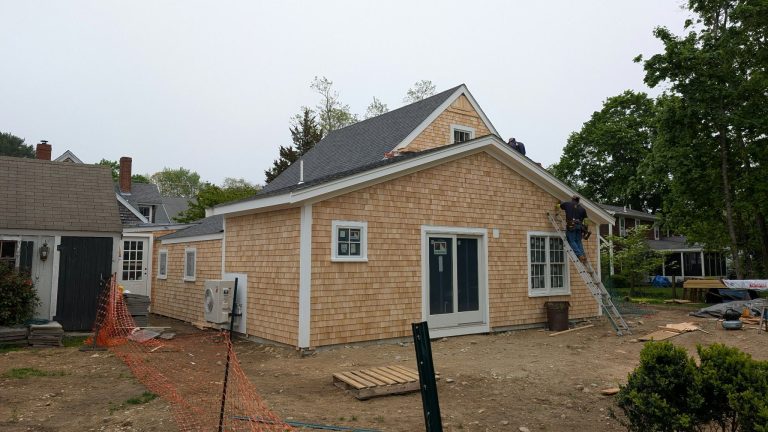
At Morrissey Family Roofing, we treat siding with the same engineering-minded discipline we bring to every roofing system. As a licensed, certified, family-operated roofing and exterior contractor based in Massachusetts, we serve homeowners and businesses across East Bridgewater and surrounding areas, and our siding work reflects the strong values, ethics, and uncompromising standards that guide everything we do.
Siding Installation Done the Right Way
A siding installation is only as durable as the preparation behind it. Before a single panel goes up, we inspect the sheathing, evaluate the existing weather barrier, and address any hidden moisture or rot that could undermine the finished result. Skipping these steps is how volume-based operations create callbacks — and we’re not a volume-based operation. We’re a relationship-driven company that takes pride in doing the job right, the first time.
We work with a range of siding materials suited to the demanding climate of coastal and inland Massachusetts. Each has distinct performance characteristics:
- Vinyl siding: A cost-effective, low-maintenance option available in insulated profiles that improve energy efficiency and resist fading.
- Fiber cement: Exceptionally durable and fire-resistant, standing up to salt air, wind-driven rain, and temperature swings common on the coast.
- Cedar and wood siding: A timeless natural look that pairs beautifully with historic and traditional New England architecture.
- Composite systems: Engineered for dimensional stability and long-term color retention with minimal upkeep.
Proper flashing, fastener spacing, and expansion tolerances are critical technical details on any installation. We follow manufacturer specifications precisely, ensuring water is directed away from the structure and that panels can move naturally without buckling or cracking through the freeze-thaw cycles this region is known for.
Siding Repair That Protects the Whole Structure
Not every siding problem calls for a full replacement. Localized damage from storms, impact, or age-related wear can often be corrected efficiently when caught early. The key is identifying the true source of the issue rather than simply patching the symptom.
Our repair process begins with a careful diagnostic assessment. We look for the underlying cause behind visible damage, whether that’s a compromised moisture barrier, failing caulk joints, or improperly installed original panels. Common repairs we address include:
- Cracked or broken panels: Replacing damaged sections and color-matching to blend seamlessly with existing siding.
- Water intrusion behind siding: Correcting flashing failures and restoring the weather-resistant barrier before rot spreads.
- Warped or buckled sections: Diagnosing improper fastening or trapped moisture and reinstalling to specification.
Because we’re also a roofing contractor at our core, we understand how siding interacts with rooflines, valleys, and drainage. That whole-exterior perspective helps us catch problems that a siding-only crew might overlook. When homeowners across East Bridgewater, Bridgewater, West Bridgewater, Whitman, Abington, Hanson, Brockton, & Rockland, MA call us for a repair, they get a contractor who sees the building as an integrated system.
Siding Maintenance for Long-Term Performance
Even the finest siding benefits from routine attention. Maintenance is where you preserve both the appearance and the protective function of your investment, extending its service life well beyond what neglect would allow. A little proactive care goes a long way in a climate defined by heavy snow, coastal moisture, and dramatic seasonal shifts.
Regular maintenance typically includes gentle cleaning to remove mildew and salt buildup, inspecting and resealing joints, checking fasteners, and confirming that trim and corner details remain watertight. We recommend an annual walkthrough, ideally after winter, so any small vulnerabilities are addressed before they escalate into structural concerns. Catching a failing seal in spring is far less costly than repairing water-damaged sheathing in the fall.
Why Homeowners Choose Morrissey Family Roofing
We are veteran-owned and built on a foundation that shows up in every detail of our work. Morrissey Family Roofing is fully licensed under CSL and HIC, insured, and certified, and we approach siding with a client-first mindset — listening to your needs, communicating clearly from estimate through completion, and recommending solutions built to last.
We offer free consultations along with flexible financing options, including deferred and same-as-cash programs. Whether you’re upgrading a single-family home or a light commercial property, we’re earning your trust, one shingle at a time.